We are living in a time of abundance of information, technology, and economic growth. Personally, I wouldn’t want to live in any other era. This is the best time to live.
Over the last couple of months, I have met people across the board: people building agentic biolabs, neuromorphic vision, compliance startups for nuclear power plants, next-gen media labs, robotic kitchen arms and whatnot.
Humanity is now exploring questions that were so far-fetched for millennia that they were thought of as fantasy. We are developing technology after technology and the future looks very interesting, to say the least.
This has made me think deeply about tech and humanity’s relationship to it.
Part of this is probably because growing up, the only thing I had a real connection with was technology. Initially it was stealing my uncle’s phone charger, breaking it open to see how it worked and then trying to put it back together. Later it was making a Python script with a rudimentary TTS voice that could say “Good morning Waris.”
I develop an almost emotional connection to my tech. I always have. I want to understand it, use more of it and see what comes next.
The other reason is seeing people around me adopt new technology. Whether it is my extended family starting to use ChatGPT in their daily work life or my friends immediately using the latest Instagram feature, there is something interesting about watching a technology go from being this weird new thing to something everybody just does.
Side note: I have ALWAYS had a weird feeling when non-techy people start using new tech. Something shifts when a thing I am deeply interested in suddenly becomes common practice. It almost feels like I have lost something.
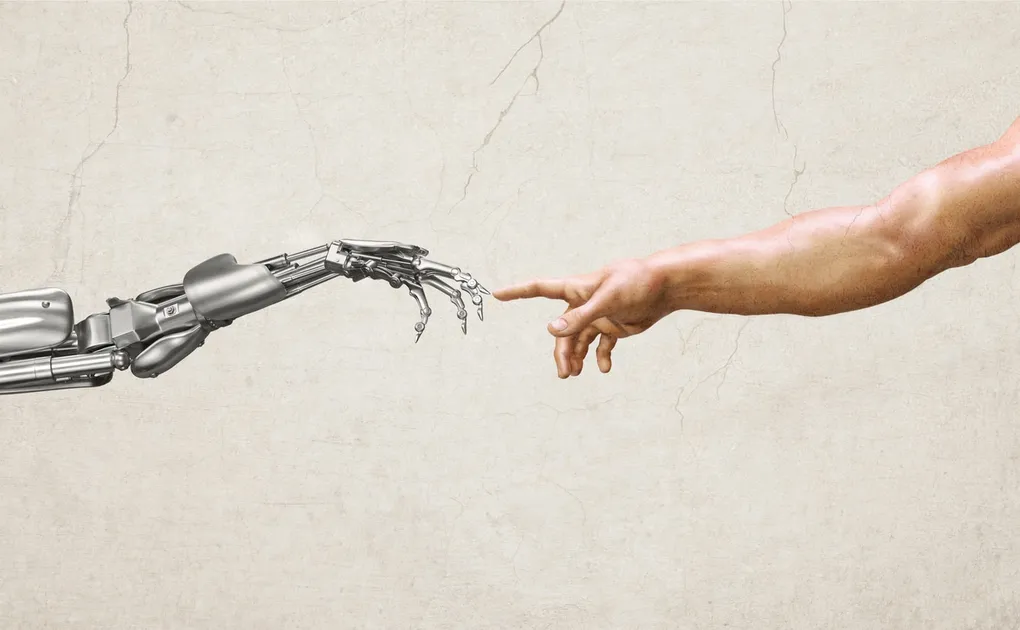
This relationship between humanity and tech has always existed. But with the advent of LLMs and AI that appears conscious and sentient, this relationship has become much more concrete and visceral.
We talk to AI agents like they are our friends. We ask them for advice on serious things like careers and relationships. We tell them secrets we wouldn’t disclose to some of our closest friends. We get angry when they don’t work, argue with them and sometimes humorously curse at them.
This might be the golden age for this relationship. It is new enough that we still notice it, and I don’t think that lasts.
And that brings me to the future.
Growing up I remember watching all these movies where humans had robots living with them, helping them with random stuff, talking to them and basically becoming their friends. I always thought that was where technology was eventually headed.
Somewhere along the way, I think we, specifically tech people, stopped talking about this future.
We became obsessed with the week to week: LLMs, benchmarks, coding models, agents, enterprise AI, the SaaS boom and bust. We have almost accepted that the sci-fi future is gonna come around eventually and… meh. It isn’t the talk of the town anymore.
But I think we are forgetting the bigger picture here.
This is the inflection point.
We now have RAW, universally available artificial intelligence and we are getting most of the other technology required to actually do something crazy with it.
Capital knows this: almost 90% of all venture dollars in the US went into AI companies this year. Just think about how much that is — not 90% of tech investment. Almost 90% of all venture capital.
And yet, a lot of modern internet companies seem to be moving in a much narrower direction. OpenAI, for example, went from wanting to build the consumer AI that everybody uses to increasingly focusing on enterprise, better coding models, agents and scoring higher on benchmarks.
Don’t get me wrong, I am an engineer at heart. I spend most of my days in a terminal talking to Codex. I am loving the agentic era.
But it’s not enough.
AI shouldn’t just transform the lives of engineers and tech-savvy people. It should be baked into everybody’s work, their lives, the problems they face and the person they are trying to become.
That is the step-change I care about.
That is the utopia those old sci-fi films promised us.
And I don’t think getting there is just about making AI smarter.
The thing with technologies is that the best ones eventually stop feeling like technology.
Nobody walks into a room, switches on the lights and thinks about how insane electricity is. You don’t open Google Maps and think about the satellites orbiting Earth that are figuring out exactly where you are. At some point the technology becomes so normal that you stop noticing it altogether.
I think something similar is going to happen with intelligence.
Right now, we still go to the intelligence.
We open ChatGPT. We type something into a box, it gives us an answer, and then we take that answer somewhere else.
Even with agents, most of this stuff still lives inside our computers and we are very aware that we are “using AI”. In some cases, it is almost looked down upon.
I don’t think this is gonna last.
Imagine something that actually knows what you are trying to become. It remembers some random idea you had six months ago and brings it up when it suddenly becomes relevant. When you are confused about something, it teaches you. When you are being stupid, it tells you that you are being stupid. When something needs to get done, it can actually go and do it.
And you don’t have to sit there figuring out the perfect prompt every single time.
Eventually it will leave the screen too.
It will be in your glasses, your home, your car and eventually robots. At some point, I think the distinction between “using AI” and just living your life starts to disappear.
That future is much more interesting to me than whether the next model gets 82% or 87% on some benchmark.
To be clear, benchmarks matter. So do coding agents and enterprise AI. We need all of this stuff. I spend an embarrassing amount of my own time playing with it.
I just don’t think any of it is the destination.
Just think about it: for most of human history, getting access to intelligence was HARD. If you wanted to learn something, you needed the right book, teacher, institution and whatever else.
Now we are moving toward a world where you can have something insanely intelligent sitting with you all day, basically for free.
I don’t think we have really internalized how fucking weird that is.
Maybe that is what the weird feeling from earlier is actually about. Not that I have lost something, but that something genuinely strange is turning ordinary.
You discover something when it is still magical. You spend hours playing with it when nobody around you cares. Then slowly more people discover it. Your friends start using it. Your family starts using it. Eventually everybody is using it and nobody thinks it is interesting anymore.
The magic disappears.
But I am starting to think that might actually be what success looks like for technology.
The best technologies become boring.
Twenty years from now, saying “I’m using AI” might sound as weird as saying “I’m using electricity.”
Intelligence will just be there.
That is the arc I have watched my whole life. The computer eventually became the thing I worked on, learned on, made friends on, wasted time on and did almost everything else on.
And now it can talk back. I don’t know, that’s really fucking cool.
When I was a kid, I wrote a Python script that could say, “Good morning Waris.”
At the time, this felt like magic. In retrospect, I think it was a very primitive version of what I have always wanted from technology.
A companion.
And for the first time, we can actually build one.